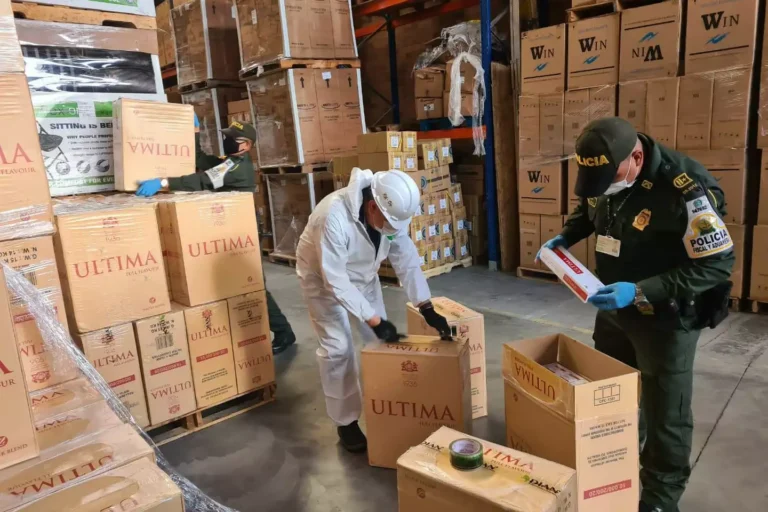




Smuggling crimes are regulated by Law No. 5607. Previously, smuggling crimes were regulated under various different laws. For example, the provisions related to cigarettes and tobacco were found in Law No. 4733, while regulations concerning illegal fuel were addressed in Law No. 5015. Other smuggled goods are regulated under Article 3 of Law No. 5607. On March 28, 2013, with the amendments brought by Law No. 6455, smuggling crimes were redefined under Article 3 of the Anti-Smuggling Law. Similarly, with the amendments brought by Law No. 6545, which came into force on June 18, 2014, all smuggling crimes were consolidated under Article 3 of Law No. 5607.
If a good is smuggled and has been brought into the country through illegal means, it falls under the category of contraband goods according to the Anti-Smuggling Law. However, there are certain exceptions to this. First, after defining the general concept of smuggling crimes, we will discuss the regulations concerning cigarettes and alcoholic beverages, which are the most common types of smuggling.
According to the Anti-Smuggling Law, if goods are brought into the country without undergoing customs procedures or if they are brought through customs with deceptive practices that result in partial or total evasion of customs duties, these acts are subject to penalties. Additionally, if goods subject to a transit regime are left in the customs area contrary to the regime’s provisions, or if goods imported temporarily for processing or for specific purposes are falsely processed as if they have been exported, the individuals involved in these acts are also subject to penalties.
Furthermore, according to the Anti-Smuggling Law, if these goods are brought into the country by other individuals, those who smuggle the goods are also penalized. Additionally, those who knowingly buy, sell, store, or transport these goods for commercial purposes, despite knowing that they are smuggled, are similarly penalized.
Within this framework, if contraband goods are found in a workplace, home, vehicle, or any other location, or in a person’s possession, an investigation will be initiated against the individuals involved under the Anti-Smuggling Law, and a public case will be filed in the competent court.
In our country, smuggling crimes primarily occur through the sale of cigarettes and tobacco products, which constitute the majority of such crimes. Additionally, there is a significant prevalence of smuggling crimes involving alcohol and alcoholic beverages. In recent years, there has also been an increase in smuggling crimes involving mobile phones and electronic goods.
When we examine Article 3 of Law No. 5607, particularly paragraph 3/5, we find regulations concerning smuggling related to all types of goods. In the provisions concerning contraband tobacco products and alcoholic beverages, it is seen that these are regulated under different paragraphs, with various references made to related provisions. In Article 3/18 of Law No. 5607, it is stipulated that individuals who produce, possess, transport, offer for sale, or sell tobacco products, cigarette papers, ethyl alcohol, methanol, and alcoholic beverages that do not have the appropriate tax stamps, labels, holograms, seals, or similar marks, or those that carry counterfeit or misleading stamps, labels, holograms, seals, or similar marks, or who knowingly purchase these products for commercial purposes, shall be punished with imprisonment from three to six years and a judicial fine of up to 20,000 days. The continuation of this article states that if these tobacco products, cigarette papers, ethyl alcohol, methanol, and alcoholic beverages are smuggled, the penalty will be determined according to the provisions of Article 3/10.
Thus, Article 3/18 of Law No. 5607 stipulates that individuals who possess, transport, purchase, or sell unstamped tobacco products or unstamped alcoholic beverages for commercial purposes will be penalized. According to this article, it is not necessary for the goods in question to be smuggled or brought into the country through illegal means. The absence of the tax stamps, as determined by the Tobacco and Alcohol Market Regulatory Authority (TAPDK), on tobacco products and alcoholic beverages makes it possible for the person to be penalized under this article. According to the last sentence of this article, if these tobacco products and alcoholic beverages are smuggled, they will be penalized according to Article 3/10 of the same law, which refers to the penalties in Article 3/5.
In summary, the articles under which a person will be penalized depend on whether the seized tobacco products and alcoholic beverages are smuggled. If the tobacco products and alcoholic beverages are domestically produced, the person must be penalized according to Article 3/18 of Law No. 5607 if these products are found in possession for commercial purposes, offered for sale, purchased, or transported. However, if these products are smuggled, the person must be penalized according to Articles 3/5 and 3/10, as referred by Article 3/18 of the same law.
The critical issue here is whether the goods are smuggled or not. If the seized tobacco products and alcoholic beverages are domestically produced, the person must be penalized according to Article 3/18 if the required tax stamps are missing from these products. However, if these products are smuggled, the person must be penalized according to Articles 3/5 and 3/10.
Article 3/22 of the Anti-Smuggling Law was amended by Law No. 7242 on April 14, 2020, to introduce the “low-value reduction.” According to this amendment, if the value of the seized goods is low, the penalty can be reduced by up to half, and if the value is minimal, the penalty can be reduced by up to two-thirds. According to this article, the judge does not have discretionary power. This means that if the seized goods are considered of low value, the penalty must be directly reduced by half, and if they are of minimal value, the penalty must be reduced by two-thirds. Furthermore, if the goods are of excessive value, the judge is given discretionary power to increase the penalty by up to double.
Additionally, Article 62 of Law No. 7242 introduced an “effective remorse” provision in Law No. 5607. According to this provision, if a person commits one of the smuggling crimes mentioned in Article 3 and shows effective remorse by paying twice the customs value of the goods to the state treasury, a reduction of half is applied if the payment is made during the investigation phase, and a reduction of one-third is applied if the payment is made during the prosecution phase. The judge does not have discretionary power in this effective remorse reduction. If the legal conditions are met, this reduction must be applied. During the investigation phase, the prosecutor conducting the investigation must inform the suspect about this effective remorse provision. If this notification is not fully made during the investigation phase, the judge must notify the defendant during the prosecution phase.
However, this effective remorse provision does not apply to repeat offenders, meaning individuals previously convicted of smuggling crimes or those who commit the smuggling crime as part of an organized activity, even if they pay the amount determined for effective remorse. In practice, it is observed that the provision regarding repeat offenders in this article is often misunderstood. The concept of repeat offenders is regulated in Article 58 of the Turkish Penal Code (TCK), which stipulates that if a person is convicted of an intentional crime and commits another crime within a certain period, the repeat offense provisions will apply, and the person will be considered a repeat offender. However, according to the jurisprudence of the Court of Cassation, the concept of repeat offenders in Article 5/3 of the Anti-Smuggling Law refers to individuals who have been previously convicted of smuggling and commit the crime again. In this case, even if the person pays the amount determined for effective remorse, they cannot benefit from the reduction.
In this article, we have provided an overview of the definition of smuggling crimes and the most common smuggling offenses concerning tobacco products and alcoholic beverages, and discussed the value reduction and effective remorse provisions introduced by the law.
You can contact us for these and similar problems. GSM / WhatsApp : 0532 615 52 87